
Welcome to the second episode of the series “Back to Basics”.
Did you ever wonder what’s actually happening inside a wire when you flip a light switch? What is electricity really?

People knew about electricity since a very long time, but although they observed the related natural phenomena, they didn’t know how to explain them.
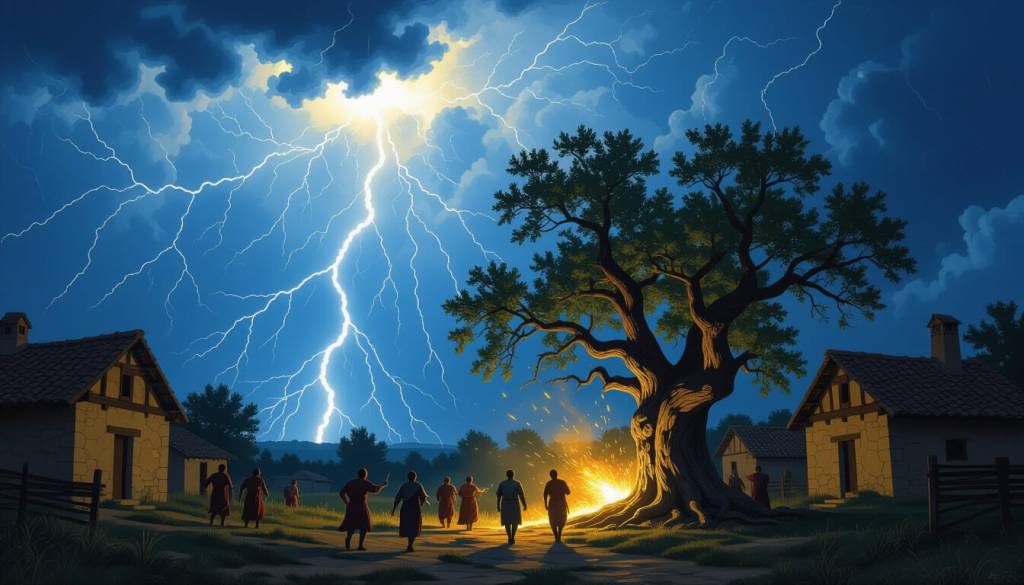
They could see a thunderstorm and a lot of lightning, but they didn’t know what lightning was and so they attributed it to angry divinities that used the thunder bolts to punish bad people.
They could stroke a bar made of amber and they would see it attract light pieces of other materials. But they didn’t know why that was happening so they attributed that phenomena to magic.

It was only in the 19th century that humanity finally got a better understanding of electricity. They understood the physical principles behind it and learned how to use it, first for their own pleasure, then for actually do some work to help themselves.

And finally we learned how to use electricity to do the most incredible things: light up our houses, create radios, TVs, computers, robots, and everything you can think of today.

If you would like to understand more about electricity and, maybe one day, be able to bend it to your will, just follow me in this series and its companion videos on YouTube. Through that, you will learn concepts like voltage, current, resistance, capacitance and inductance; and you will learn how the devices around us are made of, and about the electronic components.
And, moving forward, you will learn how to build new things out of those components and, who knows? Maybe one day you will be the great inventor that will revolutionize again our society.
Let’s start today with some basic concepts: voltage and current, and how they are related to each other.
What Are Voltage And Current?
What is voltage? Think of it as of some form of energy that moves things around. The typical example is a river that flows down a hill.

The height of the hill from which the water flows represents the voltage, which is measured from the bottom to the top of the hill. The higher the hill, the higher is the potential energy of the water, and the higher is the voltage. If you’d like to go a little deeper on the concept of voltage, you may want to watch this video:
The current, instead, is made of all the droplets of water that flow down through the river. Such droplets, in terms of electricity, are called electric charges.

The height of the hill is the same as the voltage of a battery, the wire connected to the battery is the bed of the river, and the water that flows in the river is the electric current in the wire.
The higher the hill, the more water will flow down the river. The higher the voltage of the battery, the more electric current will flow in the wire.
For more details on the concept of current, you may want to watch this video:
We measure the voltage in Volt and the current in Ampere. We usually represent these measurement units with the letters V and A. And we can measure these entities with instruments that are called volt-meters and ampere-meters, or am-meters for short, just like we measure the height in meters and the amount of water that flows down the river in liters/second.
Well, yes, in US people is more accustomed with yards and gallons than meters and liters, but you got the point.
In more precise terms, volt is the ratio between the potential energy provided by a battery and the amount of charge needed to generate it.
Current, on the other end, is the amount of charges flowing through a section of the wire in one second.
Back at the beginning of the 19th century, an Italian scientist named Alessandro Volta was conducting experiments on frogs.
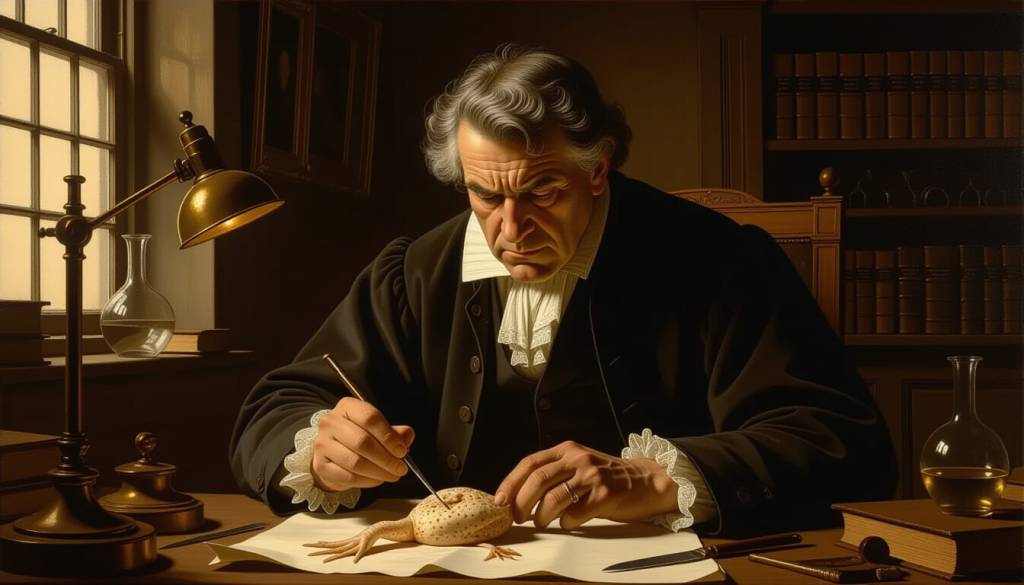
He discovered, inadvertently, that touching a dissected leg with two metal sticks made of two different materials, the leg contracted, as if it was still alive. Curious about what happened, he started experimenting with different metals and different watery solutions mimicking the fluids in the frog’s leg. Soon, he discovered a way to generate electricity. He just invented the battery, which he called pile, since it was made of a pile of metal and paper disks, moistened with an acidic solution.

Today, we call that device a voltaic pile, made of several voltaic cells, to honor the inventor of the device that revolutionized our civilization.
After that, other people started experimenting with this newly found source of electricity, and names like Georg Simon Ohm and Andre’-Marie Ampere became famous in that same century. Yes, just about 200 years ago.


What Is Resistance?
In particular, Andre’-Marie Ampere found a way to measure the current flowing in a piece of metal when a voltage was applied to it.
Georg Ohm, instead, used the voltaic pile to run experiments on different kind of materials, to figure out how they behaved when in the presence of a voltage.
He prepared a set of metal bars of different materials and same section, connected each bar to the pile, and measured the amount of current that was flowing through. Then he changed the voltage applied to the bar, by increasing or decreasing the number of cells in the pile.
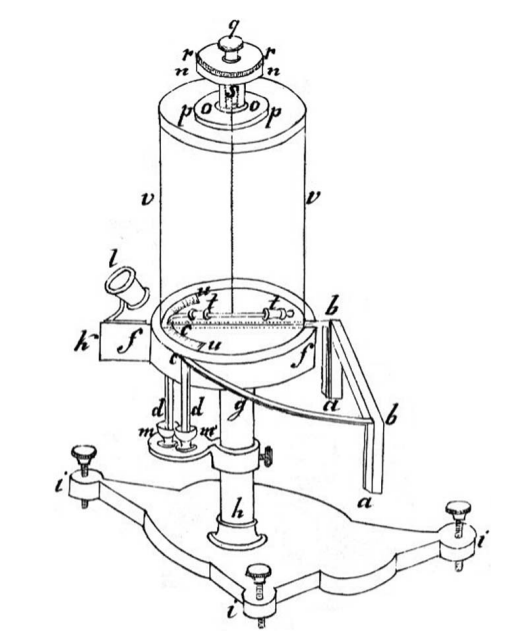
And with that he discovered that for the same bar, the ratio between voltage and current, whatever the voltage was, never changed. He called this ratio the resistance of the material. And he further discovered that different materials have different resistances.

Ohm’s Law
Today, we have named Ohm the measurement unit of the property he discovered, and we represent it with the Greek letter Omega, which sounds like the initial of the name Ohm.
We write that the Voltage V and the current I are directly proportional as per this formula
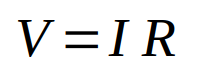
where R, the resistance, is the constant of proportionality.
In terms of their measurement units, we also write

This is what we call “Ohm’s Law, which is the foundation for the calculations of voltage and current in any electric and electronic circuit.
As you can see, the three concepts of voltage, current and resistance are not independent; they are all linked together by the fundamental principle called Ohm’s law. On the same resistance, more voltage causes more current to flow. With the same voltage, a higher resistance allows a smaller current to flow. And with the same current, a higher resistance causes a higher voltage.
Conclusion
I hope this helps demystifying the very basic concepts of electricity. In the next episodes we will go deeper into these concepts, we will learn how to measure these entities, we will learn about electronic components, how to use them in circuits, learn how to read schematics, and so forth. Please let me know in the comments what concepts you are more interested in, so I can better aim this series of tutorials to your likes.
Finally, if you like, you can also watch the video version of this post:

 eleneasy.com