Back To Basics Part 1: Safety First


Welcome to the first part of the new series Back-to-Basics, where we will explore everything electronic, from the simple components to the more complex ones, and where we will learn how to create our own circuits and make sure they are safely working.


Why Safety?

Electricity is dangerous! Whenever working on a circuit, even if powered with batteries, always be careful and pay attention on what you do. Always pay attention to safety. You could cause an explosion, start a fire, get burned, even get some shrapnel in the eyes if not careful.

In the end, you need to work safely for a number of reasons:

  1. To protect the environment where you work
  2. To protect the devices which you use while working
  3. To protect yourself
  4. To protect the electronic components you use in your projects


Let’s dig a little deeper into these points.


The Foundation

Whenever you work on an electronic device, it is always better to power it down, whether it uses batteries or the grid power. Always disconnect power before working on a circuit. And if you are not sure whether a circuit is powered or not, just use a multimeter and check it out.

The only case where you should work on a powered up circuit, is when you have to test internal functionalities to verify whether it works fine or not. Even then, you should take precautions to avoid causing short circuits, o touching parts where dangerous voltages are present.

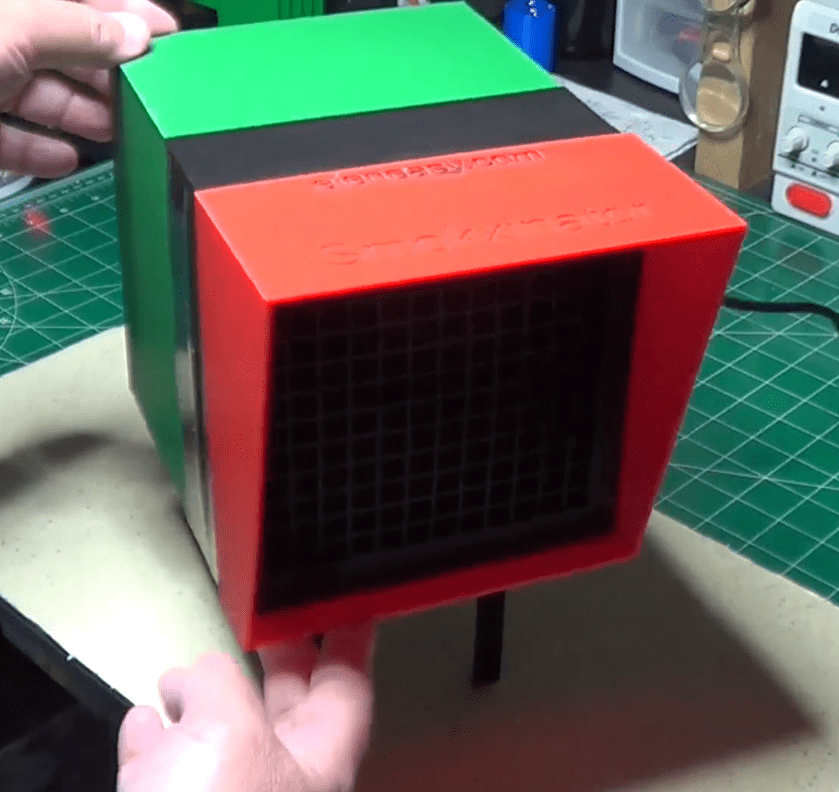
Make also sure to have a good ventilation in the work place, especially when soldering or dealing with chemicals to make PCBs. When the ventilation is limited, make sure to have around some sort of good air filtering system, like this one to absorb the soldering smokes:

or this one to keep the whole room odorless and with clean air:

To avoid unpredictable and useless hazards, always keep your workbench clean from clutter. Only put on it what you really need and try to be well organized.

And remember: food and drinks are not among the necessary items on your workbench. Besides the risks of spilling liquids on electronic circuits, never touch food after handling electronic circuit, especially if soldering is done with a tin-led compound. Keep food away and wash your hands immediately once you leave your lab area, even if it’s done for only a few minutes.

Finally, just for those unpredictable moments, always keep around a small fire extinguisher, like this one:

as well as a first aid kit and a list of phone numbers to call in case of an emergency.


Protect yourself

Although workplace safety is important, it is also important to not underestimate personal safety. Especially when working in certain conditions, it is important to wear personal protective equipment, or PPE.

When the conditions suggest that, it is appropriate to wear safety goggles or glasses to protect your own eyes from sprays of melted solder, flying wire clippings, or chemical splashes, for example while etching a PCB.

Insulated gloves become useful when working with high voltages, like the voltage coming from a power outlet.

And it is also important to always wear shoes that have an insulating sole, so you are not electrically connected to ground when handling such high voltages. And, even if you are not dealing with high voltages, it could still be useful to prevent, for example, sending high impedance signals to ground when touching a circuit under test, or something similar. Sitting on a wooden stool also helps in staying insulated from ground.

But, obviously, there are circumstances where you actually want to be connected to ground, although never directly but through a relatively high resistance, for example when working on components sensitive to electrostatic charges. We’ll talk more about that particular case later.

Finally, for your own safety, it is also useful to avoid certain kind of clothes that could be too loose and could snag around anything on your workbench or, worst, conduct electricity. And, especially for that, absolutely do not wear any piece of jewelry that can touch anything that has an applied voltage and cause, possibly, a short circuit or, worst, close the circuit through your body.


Save your components

Let’s now talk a little bit about components safety. And, besides the usual talks about burning components with the iron solder or break their leads, or similar other stuff, I would like to talk about a subject that is often underrated: Electrostatic Discharge protection, or ESD protection.

I’m sure you have probably experienced static electricity several times in your life, for example when touching a door knob right after walking over a thick carpet in an environment with low humidity. Did you ever experienced a painful shock, while doing that? Or sometimes just touching another person in the same conditions, or maybe coming down from a vehicle and getting shocked while touching the metal of the door.

All of them are forms of ESD. ESD is nothing other than the sudden flow of charges between two objects, that build up opposing charges and found themselves at two different electric potentials. When such objects come into contact, or maybe just when they are close enough to each other, the charges start moving from one object to the other to reach an equilibrium, and that creates a sudden and brief current.

The problem with ESD is that while it causes just some discomfort to us, it can cause catastrophic effects to certain electronic components. And the worst thing is that we feel such discharges only if the voltages are very high, but static voltages of just hundreds of volts, or a few thousand of volts are totally unobservable to us, but they can still cause a lot of damage to electronic components, especially those based on MOS technology.

We could be charged enough to break a component as soon as we touch it, but not enough to feel the effect of the discharge. In such a case, we would move on using the component and then the whole circuit does not work or works erratically, depending on the amount of damage on the component. Integrated circuits are the most affected, because the discharge can break part of them, but the reminder works perfectly, thus causing the erratic behavior.

And that’s why understanding and preventing ESD is so crucial when handling electronic components.

So, how can we avoid such problems?

The trick is to make sure that everything on your workbench is charged to the same potential, and it is even better if that potential is the one of ground. Should you then connect yourself to ground with a wire to avoid ESD? No, and for two reasons. First, if we connect ourselves to ground, we violate one of the previous rules on our own safety. Second, if a component is electrically charged and we touch it while connected to ground, we cause right there an ESD event that could destroy the component.

Then… what do we do?

We use high value resistors. High enough not to connect us directly to ground, but small enough to allow the extra charges that may accumulate somewhere to slowly discharge toward ground without causing any damage. And we do the same with the workbench surface.

But how? We are talking about surfaces here: the one of the workbench and the one of our body. How do we connect a resistor to a surface?

We don’t. Instead, we make the whole surface itself a resistor and we connect a corner of it to ground, leaving everything else, the other end, ready to discharge any voltage that may come close to it.

This is done with wrist straps that we can wear:

and it is done with ESD mats:

which we lay on top of the workbench surface when we need to work on something that need ESD protection.

The wrist strap ends with a wire that can easily be connected to ground. It has also an internal resistor, usually 1M, to make sure we are not directly connected to ground, for our safeguard, and the safeguard of the sensitive components.

Similarly, the ESD mats can be lay down on the workbench and their wire can be connected to ground, making sure that there won’t be any accumulation of charges on the workbench.

The ESD mats are made of a material that offers a certain amount of resistivity , so that the ESD can happen without causing dangerous currents.

But it’s not all. Don’t think that using a wrist strap and an ESD mat is enough for protecting sensitive components. You also need to store them in a safe place, a place where they cannot be reached by electrostatic charges.

The concept is the same: you wrap them in a resistive material that prevents charges to accumulate on itself, and that prevents those charges that still contaminate it to reach the wrapped component.

Welcome to the anti-static bags and containers and to the anti-static foam, both made of plastic mixed usually with graphite, which guarantees a certain resistivity, not too low, not too high.


Tool-specific safety

Another important aspect of lab safety is related to the correct handling of the instruments we all use.

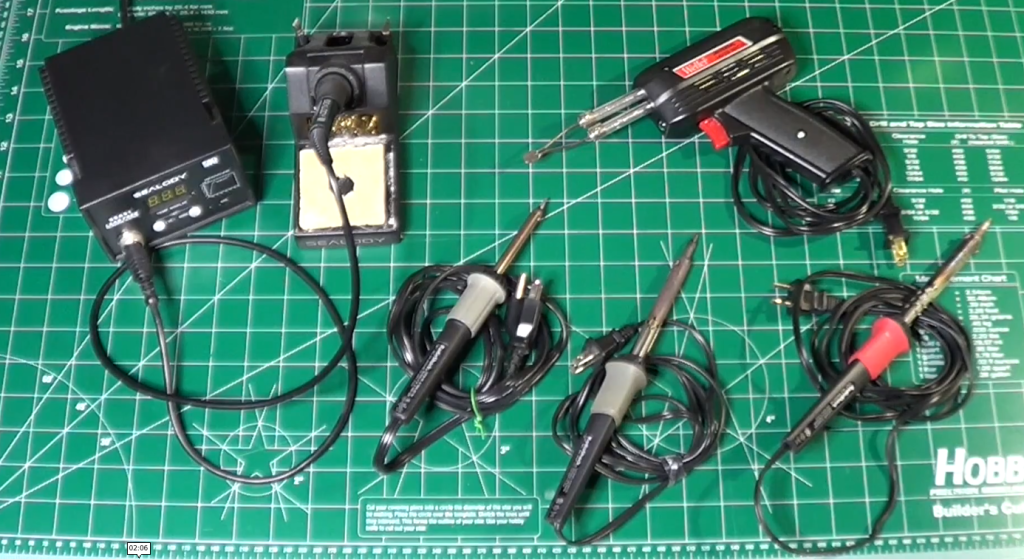
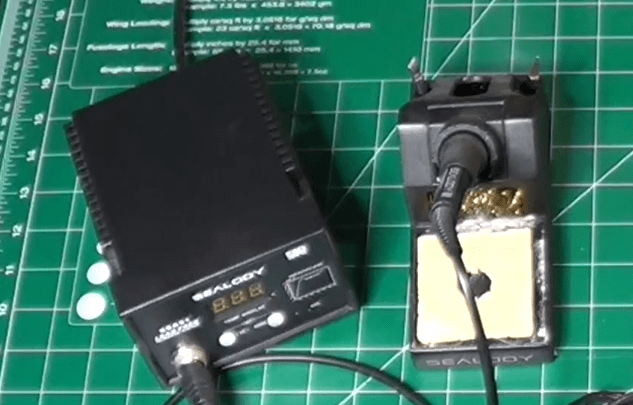
And the first one I would like to mention is the soldering iron, which we all use to connect components to a PCB, or to each other.

Whenever the soldering iron is on but not being used, make sure you put it on its stand.

These stands are usually made of metal, or at least the part that is in touch with the soldering iron is made on metal, capable to resist to the temperature of the iron itself. Putting the soldering iron directly on the workbench is not a safe thing to do. It can inadvertently touch something and melt it or burn it. It can fall on the floor, it can land on your lap burning you. So, always keep the soldering iron on the stand when not in use.

Another important thing is to keep the tip of the soldering iron perfectly clean. It is clean when it is covered with a thin layer of solder. The solder covering the tip allows it to better transfer its heat to the components and thus have less chances of making bad soldering points.

Whenever the tip gets dirty, it should be cleaned thoroughly. Never try to clean it with abrasive objects, like a file or sand paper. If you do that, you may risk of ruining the underlining protection of the tip, which will then not be able to work well anymore.

To clean the tip, I usually use some rosin paste. I heat the soldering iron and i submerge the tip into the paste for a few seconds. Then I remove it from the hot bath and I clean it with a cotton rag. Please do not use rugs made of synthetic material because that could melt onto the hot tip and ruin it.

Once done that, if there is not enough solder left on the tip, just melt some on the tip and then clean it again with the rug. Keep doing that until it starts shining.

Even while you solder you should clean the tip every now and then. To do that, you can just scrape the excess solder using one of these cleaning sponges made of copper wire.

Alternatively, you can use a real sponge kept humid, and not totally wet, to brush the tip clean.

Between the two, the one I prefer is the copper wire sponge, as the actual sponge tend to lower the tip temperature for a few seconds.

And of course, while you solder, try to avoid breathing the smoke. If you can, use a fume extractor. Otherwise try to at least ventilate the room, or use an air filtering system set to its max.

Now, I know I shouldn’t tell you that, since it is obvious. However, I feel it is always better to be safe that sorry. So, here it is: please never touch the tip of the soldering iron when it is on, even if you think is not that hot.

Finally, always, after each soldering session, please wash your hands thoroughly, especially if you use a lead-based soldering wire. The lead of such wires will not evaporate and you will not breath it, but lead residues can remain on your fingertips and you can later ingest them.

Soldering fumes do not contain lead, only rosin. There is not enough heat to make the lead evaporate. Just avoid breathing the fumes because they smell bad and you might be particularly sensitive and start coughing. Plus, rosin has really an acid-like smell which you may want to avoid breathing.

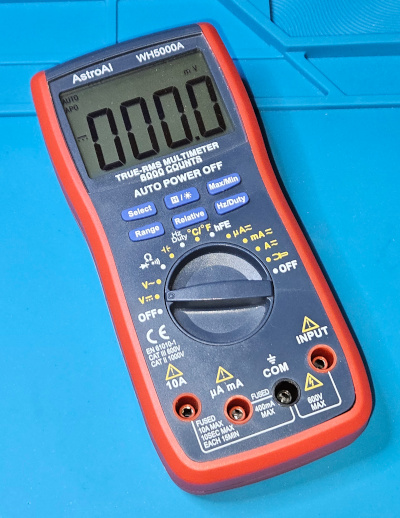
Let’s now talk about another lab device that we want to keep safe: the multimeter.

First, let me point out what is called the “category rating” or simply cat rating.

The cat rating is usually indicated on the instrument itself. This one, for example, is certified for both category 2 and category 3.

But what does that mean?

Category levels let us know the maximum rating of an instrument, according to this table.

Additionally, the category of an instrument also specifies the transient conditions under which an instrument should be used. That is because transient conditions allow for higher voltage measurements, but only for very short period of times.

This table provides, for each category, the max continuous voltage and the transient voltage, as well as the internal impedance of the energy source.

So, for example, a cat 2 instrument certified to work at up to 600V, is supposed to be able to handle transients up to 4000V.

And here are the typical probes used with a multimeter:

To avoid breaking the multimeter you are using, it is also important to set it appropriately for the measurement you need to perform.

At least, you will have to set the measurement unit that you need and the device will take care automatically to select the most appropriate range.

For totally manual instruments, however, you will have to select not only the measurement unit, but also the range.

Be careful when doing so. Multimeters can break. Always set a range higher than the max value you expect to measure. If you don’t know what the max value could be, start with the highest setting, and then lower them one step at a time until you reach the lower possible range that is still higher than your max value.

And finally, before using the probes, make sure they are fine. Check especially for any breakage in the wires insulation. You don’t want to get an electric shock inadvertently.

Another tool category we need to talk about is the one of wire strippers and cutters. They seem to be simple tools to use but an improper use of them may lead to frustrating mistakes, and can even damage components or cause injuries.

There are different types of cutters and strippers for different tasks. Here are some examples. Using the wrong one for the task being performed can become a major hassle.

The standard stripper has usually multiple holes of different sizes. To use it properly, you must match the hole size with the wire gauge.

A self adjusting stripper is less precise than the standard one, but it is better suited for bigger cables like, for example this coax cable.

Using the most appropriate stripper for the job will prevent you from accidentally nicking or even cutting strands of wire, which can later weaken the connections and possibly cause a break during operations.

Here are a few examples of wire cutters.

A flush cutter like this is very useful to cut small wires, and it is perfect for cutting that extra length of component leads after they have been soldered to a board.

A diagonal cutter is definitively more robust than a flush cutter and it is more suited for thick wires or whenever a perfectly flush cut is not required.

And of course, you may also have a combination tool. This wire stripper, in fact, can be also used as a wire cutter.

Always try to match the size of the wire with the size of the stripper or the cutter. This will avoid nicking a solid wire or cutting a few thin strands of a multi-strand wire. These events always weaken the wire making it prone to breakage under use.

Always cut away from yourself and possibly wear safety glasses to prevent flying clipping to get into your eyes.

Store these tools in such a way that the blades are protected from hitting other metallic tools that could damage them.

And, finally, never use an inappropriately small cutter to cut thick wires. The blade could get damaged.

The last category of tools I would like to mention is the one of power supply units. Most of us have at least one of these unit on the workbench. They come very useful when we need to power up a circuit we just made so we can test it.

When doing so, always make sure to connect the cables using the correct polarity. Using colored cables make this much more easier.

Be careful when using a variable power supply. Always double check that you have set the right voltage. Be aware that power supply units have fuses that can trip when the power you are using is above the limits of the unit. And some devices, even give you the possibility of regulating the max current that can be erogated. In that case, be careful not to set it too low, or the voltage will decrease when the current increases. Also, do not set the max current to a value too high, or the power supply unit will not lower the voltage if the power absorbed by the circuit under test becomes too high.

Finally, pay attention to never short the outputs of the power supply. It might cause sparks, it might burn the insulation of the cables, and it might even cause a fire.


Working with AC power

And now, just a few words of caution when dealing with circuits that are powered through a house outlet.

Please, please, please: working with AC mains voltage is extremely dangerous and should only be done either by experienced individuals or by their direct supervision.

Don’t do like myself that, when I was very young, I tried to power my HO train directly from the power outlet, (electric spark noise) burning the locomotive motor, and blackening the wall around the outlet. I am very lucky to be still here and be able to tell this story.


Best practices

In general, when working with electricity and with electric or electronic devices, be always careful. Try to foresee what could happen before you do something. Read the manuals of the equipment you use and understand their capabilities and limitations.

Always double check all the connection before powering up. If you can use lower voltages before providing the full power to the device under test, please do so: start with a lower voltage and then increase slowly, so you will be able to notice any potentially dangerous activity.

Never be in a rush when working on your workbench. Rush is the mother of the worst mistakes. Don’t let rush to overpower you.

Finally, when in doubt, don’t be ashamed to ask somebody else more expert than you. Nobody knows it all.


Conclusion

Sorry if I annoyed you with all this talk, but I believe this was a necessary start of the new series on electronics basics. From now on, I will try my best not to bore you anymore. Instead, we will dive into the world of electronics examining components, designing circuits together, experimenting with fun stuff, and more.

I have a long list of subjects ready for you, and I’m sure you will enjoy all future posts in this series.

How to design a toroidal transformer

Before getting into the formulas and calculations for designing a toroidal transformer, it is better to glide over the physics concepts that allow us to design and build such electric machines.

The physics principle according to which a transformer works is called Faraday’s Law.

This principle has to do with a correlation between the current flowing thought the wire of a solenoid and the magnetic field generated inside of it.

And it works in both directions!

If we apply a variable voltage to the leads of a solenoid, a variable current will be generated, and such variable current will generate a variable magnetic field inside the solenoid.

Also, if we take another solenoid and we submerge it inside the variable magnetic field of the first solenoid, a variable voltage will be generated at the leads of such solenoid, and if we apply a load to them, a variable current will flow.

The most important part correlates the intensity of the magnetic field with the sectional area of the solenoid.

The magnetic field through a sectional area is called magnetic flux, and the flux density and intensity correlates directly with the amount of current that the created voltage can sustain.

To understand the concept of flux, think of a pipe with a specified sectional area where water flows inside. The larger the area, the larger the flux of water going through.

If we insert a ferromagnetic material inside the solenoid, the intensity of the magnetic field will be hundred of times stronger.

We call the ferromagnetic material inside the solenoid “core”. We call the solenoid used to generate the magnetic field “primary coil”. And we call the second solenoid “secondary coil”.

This is the working principle of the transformers.

And we can do even more. We can force the flow of the magnetic flux to turn around on itself, so we don’t waste any of it, thus reinforcing even more the transfer of energy from one solenoid to the other.

Here is how it works:

1) We apply a voltage to the solenoid on the left, which ends up generating a current in the wire.

2) The current generates a magnetic field through the whole magnetic core, imprisoned by it, so we don’t loose any part of it. And that creates a magnetic flux that moves along the path identified by the core.

3) The variable flux induces a voltage into the solenoid on the right. If we connect a load, such a resistor, to the leads of this solenoid, we obtain a current, even though the two solenoids are not electrically connected to each other.

Talking about transformers, the solenoid on the left is called “primary” , which is the coil where we inject the electric current. The solenoid on the right is called “secondary”, which is the coil where we extract the induced current.

The number of turns in the first solenoid and the number of turns in the second solenoid are also correlated.

The ratio between the number of turns in the primary and the number of turns in the secondary is directly proportional to the ratio of the voltage applied to the primary and the voltage induced at the secondary:


Therefore, we can calculate the voltage at the secondary if we know the voltage at the primary and the number of turns at both the primary and secondary coils:

And this formula is at the base of any transformer calculation.

This other formula, instead, correlates the voltage with the magnetic flux and the number of turns:

where:

Kf is the waveform coefficient, which we’ll talk about later

f is the frequency of the applied variable voltage

N is the number of turns of the solenoid, or coil

Ac is the sectional area of the magnetic core

B is the magnetic flux density


And such formula is, in fact, the result of Faraday’s Law applied to our case.


Materials


Now that we know that a transformer is made of two windings and one magnetic core in the shape of a closed loop, let’s see what kind of ferromagnetic material we can actually use to make the core.

Well, the thing is that the materials we can use for the cores physically depend on some electromagnetic parameters that we need to take into account when designing a transformer.

The parameters are:

1) the range of frequencies of the involved voltages and currents

2) The intensity of the currents and, therefore, the magnetic flux density

3) The max power at which the transformer is supposed to operate.

For that, we distinguish two main categories of materials that we can use to make a core:

1) ferrite cores

2) iron-silicon cores

Ferrite cores are used for high frequency applications, from audio frequencies up to radio frequencies.

Iron-silicon cores are used for power applications, with frequencies around 50-60 Hz.

And that depends on the capability of these materials to be able to handle the appropriate amount of magnetic flux without saturating, and the capability to conduct the right amount of flux without dissipating too much energy, property that is affected by their magnetic permeability mu.

Regardless of the application, the involved power, and the frequencies, all transformer calculations are basically regulated by the same formulas.

We will now go through all the basic calculations for the use case of a power transformer. But keep in mind that the same formulas and the same procedure can also be used for audio transformers and for RF transformers.


Specifications

Before we start the procedure, we need to define the specifications for the transformer we want to design. You’ll find most of them obvious, give what we have said already.

#1 is the input voltage, which we will represent with Vi

#2 is the output voltage, which we will represent with Vout

#3 is the output current, which we will represent with Iout

#4 is the frequency, which we will represent with the letter f

#5 is the application for this transformer, either power, or audio, or RF

#6 is the number of phases, which we’ll keep to 1 for this tutorial. Multiple phase transformers need a discussion on their own, and the most of us, interested only in electronics, won’t even care about them.


Procedure


Step 1:

calculate the power that will be handled by the transformer. This is very important for two reasons:

1) we need to size the wires section so that they will be able to handle the needed current.

2) we need to figure out the sectional area of the transformer core, which depends on the power that needs to be moved.

The first reason is obvious, because although the specifications give us the amount of current at the secondary, we still need to calculate the amount of current at the primary, and that needs to be done through the power.

The second reason is tied to the magnetic flux intensity in the core. The flux intensity depends on the sectional area, and the amount of power that can be transferred from the primary coil to the secondary coil is proportional to the amount of flux. The more the power, the more the flux. The more the flux, the larger the sectional area, according to Faraday’s law.

To calculate the involved power, we just need to multiply the voltage output by the current output:


which is expressed in VA, since we are dealing with alternate current.


Step 2:

adjustment of the power because of the transformer efficiency. The problem is that not all the power at the primary is going to be transferred to the secondary, and that’s because the core itself will dissipate some of the power, mostly because of the eddy currents that the variable magnetic field will try to induce in the core. The core material is designed in such a way to present a reasonably amount of magnetic permeability while, at the same time, a high resistance. And the high resistance reduces the eddy currents. Still, there will be some loss of power, and the core will warm up because of that.

Here is the formula that adjusts the power for the efficiency:

where VA is the actual power we need, Pout is the power calculated above, and eta is the efficiency, which is a pure number between 0 and 1.

In general, we can say that for a well designed transformer with toroidal core, it is safe to assume an efficiency around 90%, or eta = 0.9.


Step 3:

calculation of the core-area product. But what is this entity?

Well, this has something to do with the geometry of the core. Basically, it is the product between the sectional area of the core, Ac, and the area of the empty space surrounded by the core, which we call Aw, or window area. Here is the formula:

This entity correlates directly with the power VA that we calculated in the previous step. The correlation is through the Faraday’s law, adjusted to consider the mechanical measurements, the power of the transformer, and the maximum amount of flux that the core can handle without having its magnetic capabilities altered forever.

You can compare the max flux that a core can handle with the max amount of current that can flow through a wire. The max current depends on the sectional area of the wire and the material, whether it is copper or aluminum, or a different compound.

For the magnetic core, the max flux depends on the sectional area of the core and the material of which it is made. The window area comes into play when you consider the length of the path the flux has to go through, like in the case of the length of the wire a current has to go through. It also comes into place when considering the space the wire will occupy when winded around the core.

These entities are correlated through the following equation:

where:

VA is the adjusted power we calculated in step 2

Kf is the waveform coefficient, that depends on the shape of the voltage applied at the primary

Bmax is the mas flux density expressed in Tesla

J is the current density through the secondary

Ku is the winding utilization factor


The waveform coefficient comes out from the resolution of the integral in the Faraday’s law equation.


It is substantially the ratio between the rms value of the voltage divided by the average of the half wave of the voltage, multiplied by 4:

For example, for a sine wave, such value is about 4.44, while for a symmetrical square wave, since the rms and average values are the same, Kf is 4.

The current density J is the ratio between the current in the wire and the sectional area of the wire. It is expressed in A/mm2.

Ku, the winding utilization, is directly correlated with the space occupied by the wire when winded around the core, and therefore depends on its geometry. An acceptable value for a toroidal core is around 0.4.

Given all of that, we can now calculate the core area product rearranging the previous formula in this way:


The factor 10 to the power of 4 converts the result in centimeters to the power of 4, which is how this entity is expressed in the data sheets of the magnetic cores.


Step 4:

select the toroidal core we would like to use.

In this step we will need to consult the manufacturers data sheets for toroidal cores. They list various core sizes with their corresponding Ap value. If the data sheet does not report that value, use the window area Aw and the cross-sectional area Ac and calculate the Ap value as:


The data sheets also provide a value for Bmax. At this point reapply the equation for the determination of the Ap value with the new value of Bmax and, if that is smaller then the one we are using, go back to that step and recalculate the needed Ap using the given Bmax value. Then search for a better core. This step may take a while, as you’ll have to try multiple times until you find the core you need.


Step 5:

calculate number of turns per volt, or TPV.

The number of turns per volt is calculated using the following formula:

where:

Ac is measured in square centimeters

Bmax is measured in Tesla

f is measured in Hz

Kf = 4.44 for a sine wave

If the datasheet you are using provides Bmax expressed in Gauss, you’ll have to convert it into Tesla knowing that

1T = 10,000G.


Step 6:

calculate number of primary turns Np.

Now that we have the number of turns for one volt, we can calculate the total number of turns in the primary by multiplying TPV by Vin:


Step 7:

calculate number of secondary turns Ns.

This calculation can be achieved in two different way. Choose the one that you like the most.

First option:

apply the same equation used to calculate the primary turns, but add 5% to adjust for losses during the transformation process:

Second option:

Use the known ratio of voltages to calculate the ratio of turns and add the same 5% correction:


Step 8:

calculate primary current Ip

The current at the primary needs to provide the power needed at the secondary:


Step 9:

select wire gauges of primary and secondary coils.

Based on the max amount of current flowing in the primary, select the most appropriate wire gauge to prevent coil overheating. Then do the same for the secondary coil.

We will call the sectional area of the primary wire

And we will call the sectional area of the secondary wire


Step 10:

estimate winding space.

This is a necessary step to make sure that we can fit both coils on the core we have chosen. In particular, we need to make sure that there is enough space in the toroidal window to fit all the turns and to leave some space in the center.

The total wire area for the primary will be equal to


The total wire area for the secondary will be equal to

The sum of these quantities + insulation area should not exceed about 40% of the window area Aw.

If that cannot be done, we will need to go back to step 4 and select a larger toroidal core. Then redo all the calculations starting from there.

And there you have it. The complete procedure to calculate a toroidal transformer, which you can also watch on this YouTube video:

You can use this procedure to design your own transformers, either for power supplies, or for small circuits that require a similar component to perform some kind of task. For example, an audio transformer to adapt the impedance between two elements in the audio chain, or a small transformer to create your own boost converter, and so on.

Just make sure, once you have done all your calculations, to go through them more than once and make sure everything is right. Especially with power transformers, a wrong calculation can cause a lot of damage or even cause harm to yourself and/or others.

It is your responsibility to make the proper calculations to avoid damage to objects and people.

Understanding Resistivity Through Practical Experiments

Last month, a reader of this blog asked me a question about the possibility of measuring the resistivity of a powder mixture he created. We initiated a private conversation on the topic, and we ended up agreeing to work together to make such a measurement. He would provide me with the powder he created, and I would make the measurement for him, since he doesn’t have the lab resources for such a task.

I received the material for running the test in just a week, although coming from overseas (Belfast, Ireland). It was packaged in a double layer plastic envelop, given that it is a very light powder and can go airborne very easily. To avoid spreading it across my whole lab, I handled it wearing a mask, so that my breath would not make it fly all over the places. The mask helped also in preventing me from breathing it.

Given the consistency of this powder, I had to think at a way to easily shape it in a form that would be kept intact while I was taking the measurements on it. So I had to create a container that would also provide some sort of electrodes to electrically connect the powder to my DMM (Digital Multi Meter).

But let’s proceed in order. And let’s begin with some general information about resistivity and methods to evaluate it.

Let’s start by providing a formal definition of the electrical resistivity. That is the property of any conductive material that defines its resistance to an electric current in terms of its shape and dimensions.

https://en.wikipedia.org/wiki/Electrical_resistivity_and_conductivity

If we take a material in the shape of a cylinder, for example, the resistivity is the ratio between the electric field applied at the two bases of the cylinder and the resulting current density.

If you think about it, the electric field applied to the cylinder can be translated in a voltage per unit of length, while the current density is nothing else than a current per unit of area.

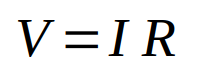
If we consider the ratio between the applied voltage and the resulting current, we obtain a resistance. Such resistance is a function of the length of the conductor and the area of its sectional surface. The constant that correlates the resistance with the length and the area is what is called resistivity, usually indicated with the Greek letter rho.

Experimentally, we also notice that the resistivity depends also on the temperature of the material, on the impurities in the material, and on the mechanical stress to which the material is subject.

Therefore, when making a resistivity measurement, we also have to specify such conditions, in particular the temperature and the stress.

So, how do we make such a measurement?

Of all the methods that have been used to do such a thing, the two most relevant are the 4-point method, or Kelvin method, and the Wheatstone Bridge method.

https://en.wikipedia.org/wiki/Four-terminal_sensing

https://en.wikipedia.org/wiki/Wheatstone_bridge

The first is normally used to measure the resistivity of thin films or bulk materials.

The second is normally used to measure the resistivity of a material in the form of an electrical wire of known length and cross-sectional area.


Now, because the resistivity measurement can be done with a great precision with the 4-point method, given that I do have a lab instrument capable of automatically perform such measurement and calculate the result with a 4 and a half digit precision, I decided to use this method over the Wheatstone Bridge.

Note that I will actually measure the resistance obtained by dividing the voltage by the current involved in the measurement circuit.

Once the resistance of the sample is measured, I will be able to calculate the resistivity by inverting the formula normally used to calculate the resistance.

Since I have a powder to measure, I have to use a container to hold it, which would also allow me to easily add electrodes to connect the instrumentation.

The first choice for a container was one that resembles an actual commercial resistor: a cylinder.

I actually designed two of them, thinking of using both to average the measurements.

The design consisted of a simple pipe with caps that would fit the two ends to trap the powder inside. Holes on the caps would be used to pass through the conductors attached to metal plates on the inside of the caps, to establish the contact with the powder.

I inserted a screw on each hole from the inside, after fitting on each a couple of metallic washers with the function of conductive metal plate. On the outside, I added extra wiring connectors to make it easy to connect my digital multimeter.

After installing a cap on one end of the first cylinder, I started filling it with the mix of graphite and ash. That, actually, wasn’t an easy task, since the powder tended to remain attached all over the places, rather than going into the pipe.

But I did it, and finally closed the pipe with the second cap. While doing that, the pressure of the air between the cap and the pipe expelled some powder, so I decided to seal the cap with some tape, to stay on the safe side.

Unfortunately, that did not help, as enough dust came out of the pipe to make the powder inside loose enough to compromise the readings. But I discovered that only later.


I realized that the measurement did not work when I started tapping on the external surface of the pipe and the resistance reading started changing substantially. Only at that point I figured that while capping the pipe I lost enough powder to leave it very loose inside the pipe. The method I employed was not working!

The good thing about this first attempt is that I learned a couple of important things:

– first, I had to create a vessel that would not loose powder once I closed it

– second, I had to make a vessel in such a way that I could change the pressure of the powder inside to see how that would affect the value of resistivity.

So, I ended up using a totally different shape, the one you can see in this new design.

Besides the different shape of the cross-section, which was now squared, the major difference in this design is the position of the opening. Instead of having two openings at the two ends, I created a vessel with a single opening going through the whole length of the device. That way, a single cap could be used to close the hole and also act as a piston to compress the dust.

When mounting the probe terminals, this time I didn’t use washers like in the previous case. Instead, I used this coating that, once dried, leaves a layer of pure silver on the treated surface.

This has two advantages with respect of the previous solution:

– first, a thick layer can be lay down very easily and uniformly

– second, silver is the best conductor known on the face of the planet, so its interference with the precision of the measurement is really negligible.

I stopped filling the vessel once I reached a height of 5mm, then I cleaned up the top of it the best I could, and carefully covered everything with the lid.

Note that the lid is made of a very light piece of PLA, so its weight is negligible compared with the atmospheric pressure acting on it. And to prevent the lid from moving or to change the pressure inadvertently, I fixed it in place with some masking tape. The whole thing is done in such a way that there is no extra pressure applied to the dust. However, if i use my fingers to push on the lid itself, I can still manually apply some extra pressure to see how it affects the resistivity of the material.

It was time to make a new set of measurements, so I fired up my DMM, I set it up to do the 4-point resistance measurement, and connected the 4 probes to the external connectors of the vessel.

Then I took my first reading, which was of 20.9 ohms. I also shook a little bit the vessel to make sure the powder was packed but not under additional pressure, and the reading did not change. That was exactly what I wanted to see.

And with that reading I calculated the value of resistivity at the atmospheric pressure, which was 10.45 ohm mm, or 0.01045 ohm m. And of course I also noted the temperature of the room during the experiment, which was about 72F or 22 degrees Celsius. Temperature changes the value of the resistivity, so it is important to know the temperature reading during the experiment.

I then repeated the process applying pressure on the vessel lid and made a few readings at different pressure values, recording all the numbers I took.

I found that increasing the pressure would lower the resistivity, until I reached a pressure of 22.563 kPA on top of the atmospheric pressure. At that point, any increase in pressure did not produce a decrease in the resistivity.

Two words about the pressure measurements, which were an important part of the procedure.

I basically used this precision scale to measure the weight exercised by my fingers on the lid. Then, knowing the area of the lid exposed to the powder, I was able to calculate the actual pressure.

At that value of pressure, and higher, I measured a resistance of 9.20 ohm, and therefore a value of resistivity of 4.6 ohm mm, or 0.0046 ohm m.

With that value, and the previous measurements at different pressures, I was able to determine that the resistivity decreased almost linearly with the increase of the pressure, and came out with this graphic representation.

For further details, here is the video I posted on YouTube on the same topic.